
Pet Urine Rug Cleaning: How to Remove Dog and Cat Urine from Wool, Persian and Oriental Rugs
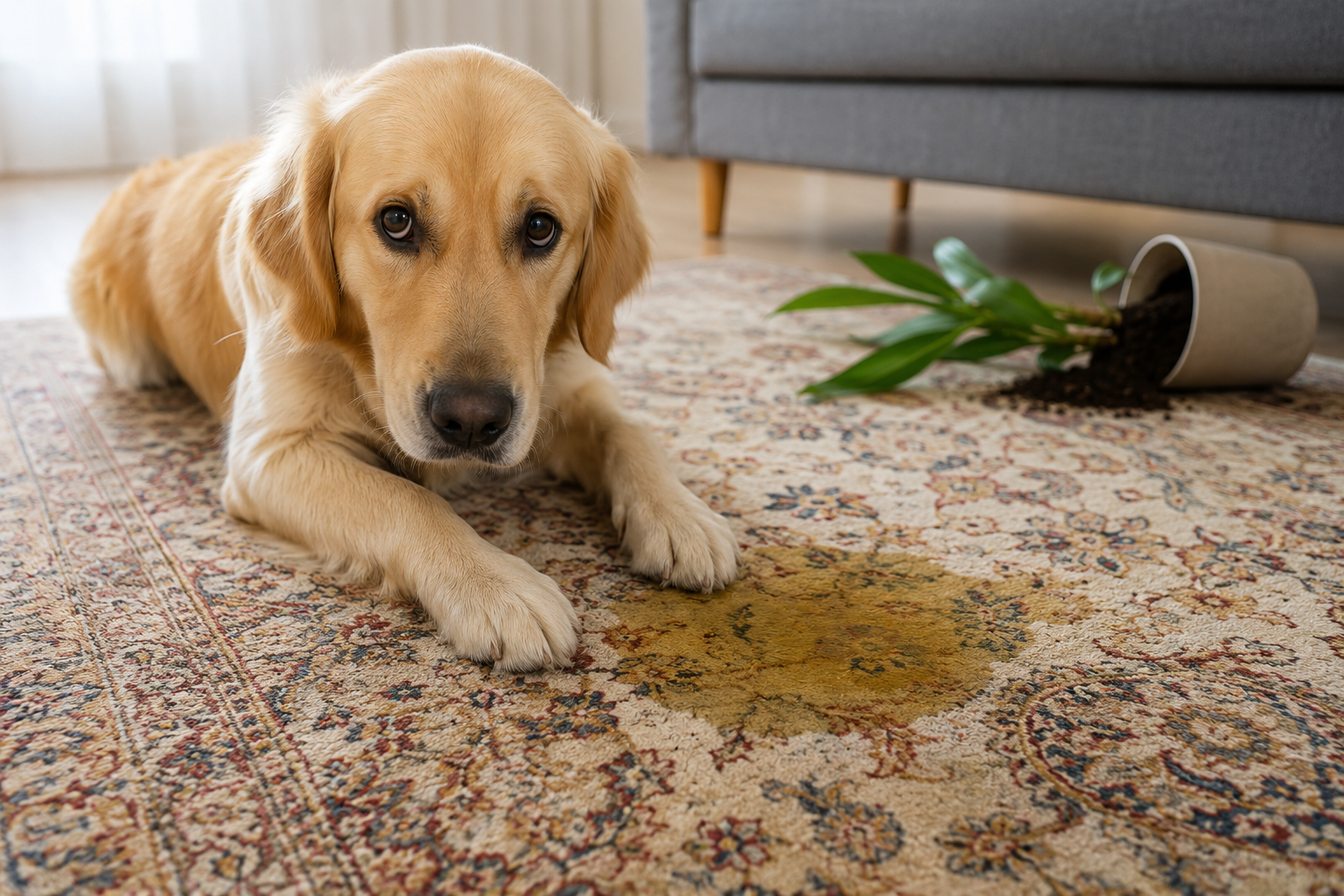
Pets are part of the family, but when a dog or cat has an accident on a rug, the result can be stressful, unpleasant and sometimes damaging. A small urine patch may look harmless at first, especially if it dries quickly, but pet urine can travel deep into the rug pile, foundation and backing. On handmade rugs, Persian rugs, Oriental rugs, wool rugs and kilims, this can cause lingering odour, staining, dye movement, fibre weakness and, in serious cases, structural damage.
At Rugmaster, we regularly receive enquiries from customers who have tried blotting, spraying, steaming or using household products, only to find that the smell returns a few days later. This happens because pet urine is not just a surface stain. It is a contamination issue. To treat it properly, the rug needs to be inspected, dusted, washed, decontaminated, rinsed and dried correctly.
This guide explains what happens when pet urine gets into a rug, what you should do immediately, what you should avoid, and when to use a professional rug cleaning service. If your rug is valuable, handmade, old, wool, silk, Persian, Oriental or colour-sensitive, it is always safer to seek specialist advice before attempting any aggressive treatment at home.
Why Pet Urine Is So Difficult to Remove from Rugs
Pet urine is one of the most challenging problems in rug cleaning because it changes as it dries. When fresh, it is mostly liquid and may seem easy to blot. However, once it begins to dry, the urine components can crystallise inside the fibres and foundation. These deposits are often the reason a rug still smells even after the surface looks clean.
The problem is usually worse with thick wool rugs, Persian rugs, Oriental rugs and hand-knotted rugs because the liquid can pass through the pile and settle deep inside the structure. If the rug is lying on wooden flooring, underlay or carpet, the contamination can also spread underneath. This is why the visible stain is not always the full affected area.
For handmade rugs, the risk is not only odour. Urine can affect dyes, weaken cotton foundations, create yellowing or browning, attract bacteria and cause the rug to become unpleasant in the room. If the urine has been present for a long time, it may also create stiffness in the pile or foundation.
This is why ordinary surface cleaning is rarely enough. A rug may need a full specialist wash, odour-neutralisation treatment and controlled drying to remove the source of the smell rather than masking it.
For more general information about how professional rug cleaning works, visit our Rug Cleaning London page.
Fresh Pet Urine vs Old Pet Urine: Why Timing Matters
There is a major difference between a fresh pet accident and an old urine stain.
Fresh urine is usually easier to treat because it has not fully bonded with the fibres or foundation. If you act quickly and correctly, you may reduce the depth of contamination before professional cleaning. The aim is to absorb as much liquid as possible without spreading the stain or forcing it deeper.
Old urine is more complicated. Once urine dries, the smell can become stronger in humid conditions or after the rug is vacuumed, moved or exposed to warmth. This is why some customers tell us the rug “only smells sometimes” or “smells worse after cleaning.” Moisture can reactivate the deposits and bring the odour back to the surface.
Old urine can also cause discolouration. On pale wool rugs, it may appear yellow, brown or orange. On darker rugs, it may not be visible but can still smell. On natural-dye rugs, there may be a risk of colour instability, which is why a dye test is very important before washing.
If you are unsure whether the stain is fresh or old, treat it carefully and avoid strong chemicals. You can also send photographs through our contact page, although for urine contamination, an in-person inspection is often the most accurate way to assess the rug.
What to Do Immediately After Dog or Cat Urine Gets on a Rug
If your dog or cat urinates on a rug, the first few minutes matter. Your goal is not to scrub the rug clean. Your goal is to remove as much liquid as possible while avoiding further damage.
Start by blotting the affected area with a clean, dry, white towel. Press down gently and repeat with fresh sections of the towel. If the rug is small enough, check the back as well because urine may have passed through. Place a towel underneath the affected area to absorb liquid from below.
Do not rub the rug. Rubbing can distort the pile, spread the contamination and push liquid deeper into the foundation. It can also damage delicate wool or silk fibres.
If there is a large amount of urine, continue blotting until the towel is no longer picking up moisture. Then allow airflow around the rug. If possible, lift the rug slightly from the floor so the underside can breathe. Do not use direct heat, hair dryers or heaters, as heat can set stains and make odour problems worse.
If the rug is handmade, wool, silk, Persian, Oriental, antique or has strong colours, stop at this point and seek specialist advice. You can contact Rugmaster through our free quote and contact form.
What Not to Use on Pet Urine Rug Stains
Many pet urine stains become worse because of well-intentioned home treatments. The internet is full of advice about vinegar, baking soda, enzyme sprays, steam cleaners and carpet shampoos. Some of these products may be suitable for synthetic fitted carpets, but handmade rugs are different.
Avoid bleach completely. Bleach can permanently remove colour, weaken fibres and damage wool. It should never be used on Persian, Oriental, wool, silk or handmade rugs.
Avoid strong supermarket stain removers unless a professional has confirmed they are safe for your rug type. Many products contain optical brighteners, solvents or chemicals that can react badly with natural dyes.
Avoid steam cleaning. Steam can push contamination deeper, set stains, cause shrinkage, distort foundations and increase dye bleed risk. For Persian and Oriental rugs, steam cleaning is generally not the correct method. If you are considering cleaning at home, read our guide on Professional Rug Cleaning Services vs DIY before applying anything to the rug.
Avoid over-wetting the rug at home. Pouring water over the urine patch may dilute the stain temporarily, but it can also spread the contamination across a wider area. Without proper extraction, rinsing and drying, the rug may develop a larger odour problem.
Avoid perfumed sprays. These do not remove urine. They simply mask the smell for a short time. Once the fragrance fades, the original odour usually returns.
Why the Smell Comes Back After Cleaning
One of the most common complaints we hear is: “The rug looked clean, but the smell came back.” This usually happens because the surface was cleaned but the contamination remained in the foundation.
Pet urine can travel through the pile and into the knots, cotton warp and weft, backing or underlay. If only the top of the rug is treated, the deeper deposits remain. When the rug becomes warm, damp or humid, the odour can reactivate.
Vacuuming can also disturb dried deposits, making the smell more noticeable. We have already covered related odour issues in our blog, Why Your Rug Still Smells After Vacuuming. Pet urine is one of the strongest examples of this problem because the source is often below the surface.
A proper treatment usually requires more than deodorising. The rug needs to be washed in a way that reaches the affected layers, then rinsed and dried correctly. If the urine has affected the dyes or fibres, further restoration may be required.
How Rugmaster Treats Pet Urine in Rugs
At Rugmaster, every rug is assessed before cleaning. This is especially important for pet urine cases because two rugs can react very differently depending on age, fibre, dye stability, construction and previous treatments.
The first step is inspection. We check the rug’s pile, foundation, fringes, sides, dyes and any existing damage. If the rug has old repairs, weak areas, moth damage or colour instability, this must be considered before washing.
The next stage is dust removal. Rugs often hold dry soil, grit, pet hair and debris deep inside the pile. Removing dry contamination before washing is essential because wetting a dusty rug can create muddy residue inside the structure. Our rug dusting process is an important part of professional cleaning, especially for thick wool and handmade rugs.
After dusting, the rug can be washed using a suitable method for its fibre and construction. For many wool rugs, this involves a controlled specialist wash that flushes the rug rather than merely cleaning the surface. The aim is to remove urine deposits, odour and residue from the affected areas.
Odour-neutralisation treatment may be used where necessary. This is designed to treat the source of the smell, not simply cover it with fragrance. The rug is then rinsed thoroughly to remove cleaning residues.
Drying is also critical. A rug that remains damp for too long can develop further odour, browning or mildew. We use controlled drying methods suitable for handmade and delicate rugs. You can read more about why drying matters in our blog, Persian Rug Care: Why Air Drying Matters.
Pet Urine on Persian Rugs
Persian rugs are often made with wool pile and cotton foundation, although some fine examples may include silk. They are durable, beautiful and valuable, but pet urine should still be treated seriously.
The wool pile may absorb urine, while the cotton foundation can hold moisture and odour. If the rug has natural dyes, there may also be a risk of colour movement if unsuitable products are used. This is why Persian rugs should not be treated like synthetic carpets.
A Persian rug with pet urine should be professionally inspected and dye-tested before washing. If the rug also has weak fringes, worn sides, old repairs or previous colour run, these issues should be identified before cleaning begins.
Rugmaster specialises in Persian and Oriental rug cleaning in London, including handmade rugs that require careful treatment. The cleaning method must suit the rug, not the other way around.
Pet Urine on Oriental Rugs
Oriental rugs include a wide range of handmade rugs from different weaving regions, including Persian, Afghan, Turkish, Indian, Chinese and Caucasian pieces. Because construction varies, urine treatment also varies.
Some Oriental rugs have dense wool pile and strong foundations. Others may be older, softer, more loosely woven or more colour-sensitive. A modern wool Oriental rug may tolerate washing differently from an antique vegetable-dye rug.
The safest approach is always to assess the rug before treatment. A professional cleaner will consider the rug’s age, fibre, dye stability, construction, previous repairs and the level of contamination.
If your Oriental rug has urine odour, staining, fringe damage or colour bleeding, Rugmaster can advise whether cleaning alone is likely to be enough or whether additional rug repair and restoration may be needed.
Pet Urine on Wool Rugs
Wool is naturally resilient, which is one reason it has been used in rug weaving for centuries. However, wool can absorb odour and moisture. Pet urine can settle into wool fibres and become difficult to remove without deep washing.
A common mistake is to spray the surface repeatedly with deodoriser. This may make the rug smell better temporarily, but it can add residues to the wool and attract more dirt. Over time, the rug may feel sticky or look dull.
Wool rugs benefit from a proper wash, rinse and drying process. The cleaning should remove urine, dirt, pet hair and residues without stripping the wool’s natural character.
If your wool rug is handmade, thick, expensive or sentimental, professional cleaning is usually the safest option. Visit our rug cleaning service page to learn more about the types of rugs we clean.
Pet Urine on Silk Rugs
Silk rugs require much greater caution. Silk is delicate, sensitive to moisture and easily affected by harsh products. Pet urine on a silk rug should be treated as urgent, especially if the rug is valuable or finely woven.
Do not scrub a silk rug. Do not use supermarket sprays. Do not apply vinegar, bleach or strong detergents. Blot gently with a clean white towel and seek professional advice as soon as possible.
Silk rugs can also show water marks, texture changes and colour changes if treated incorrectly. Professional inspection is essential before any cleaning attempt. Rugmaster has experience with delicate rugs and provides advice on silk rug care in our blog, Silk Rugs UK: Rugmaster’s Tips for Selection and Maintenance.
If the urine has caused staining or colour change, cleaning may improve the odour and hygiene, but colour restoration may need to be assessed separately.
Pet Urine on Kilim and Flatweave Rugs
Kilims and flatweaves can be particularly challenging because they do not have a thick pile to hide staining. Urine may pass through the weave quickly and spread across the structure. Many kilims also contain strong colours that can be sensitive to moisture.
Because kilims are flatwoven, over-wetting or rubbing can distort the weave, move dyes or leave tide marks. Some kilims also have wool and cotton combinations that react differently during cleaning.
If your kilim has pet urine contamination, blot gently and avoid chemical products. Professional washing should include dye testing and careful drying. If there is already colour bleeding, Rugmaster may need to assess whether rug colour restoration and bleeding treatment is possible.
Can Pet Urine Permanently Stain a Rug?
Yes, pet urine can permanently stain a rug, especially if it has been left untreated for a long time. The chance of full removal depends on several factors:
The age of the urine matters. Fresh urine is usually easier to treat than old urine that has dried and crystallised.
The rug fibre matters. Wool, silk, cotton, viscose and synthetic fibres all behave differently.
The dye stability matters. Some rugs can be washed safely, while others have dyes that may bleed if treated incorrectly.
The previous cleaning history matters. If household chemicals, steam or strong stain removers have already been used, the stain may be more difficult to correct.
The rug condition matters. A strong, healthy rug can usually tolerate cleaning better than a fragile rug with worn foundation, weak fringes or old damage.
Professional cleaning can often remove or significantly reduce odour and contamination, but no responsible specialist should promise perfect stain removal without inspecting the rug. If there is permanent dye change or fibre damage, additional restoration may be needed.
Can Pet Urine Cause Colour Bleeding?
Pet urine can contribute to colour problems, particularly on rugs with unstable dyes. The risk increases if the rug is then treated with too much water, heat, vinegar, alkaline cleaners or unsuitable stain removers.
Colour bleeding may appear as red, blue, brown or orange dye movement into surrounding areas. It may also show as a blurred pattern or stained fringe. Once dyes have moved, correction becomes more specialist.
Rugmaster offers rug colour restoration and colour bleeding services for rugs where colours have faded, moved or been damaged. We also have an existing guide on preventing colour bleeding, which is useful if your rug has strong colours or natural dyes.
If you notice colour movement after a pet accident, stop applying products and contact a specialist immediately.
Can Pet Urine Damage Rug Fringes and Sides?
Yes. Pet urine often reaches the ends and sides of a rug, especially if the accident happens near an edge. Fringes are usually cotton or silk foundation threads, and they can become stained, weakened or brittle if contaminated repeatedly.
If a pet repeatedly urinates on the same corner, the foundation may weaken and the edge may begin to fray. You may notice loose threads, a hard patch, yellowing, odour or missing fringe.
In these cases, cleaning is only part of the solution. The rug may also need securing, side repair, fringe reduction or refringing. Rugmaster provides specialist rug repair and restoration, including work on fringes, sides, holes, tears and worn areas.
It is best to repair weakened areas after cleaning, because the rug should be clean before restoration begins. This allows the repair work to be carried out on a stable and hygienic foundation.
Pet Urine and Moth Risk
Pet urine itself is not the same as moth damage, but rugs affected by pets may also hold hair, skin particles, food debris and moisture. These conditions can make a rug more attractive to pests if it is not cleaned properly.
If a rug has been in storage, under furniture or in a low-traffic room, it is worth checking for moth activity at the same time as urine contamination. Signs include missing pile, loose fibres, webbing, larvae or bare patches.
Rugmaster already covers this issue in detail in our blog, Can Moth-Damaged Rugs Be Saved?. If your rug has both pet contamination and moth damage, the safest process is usually inspection, cleaning, moth treatment and then restoration where needed.
Why Professional Rug Cleaning Is Different from Carpet Cleaning
A common misunderstanding is that a rug can be cleaned in the same way as fitted carpet. This is not always true. Many rugs, especially handmade Persian and Oriental rugs, are constructed differently from wall-to-wall carpet. They may contain wool, silk, cotton foundations, natural dyes, hand-knotted pile and delicate fringes.
Fitted carpet cleaning is often performed in the home using machines. While this can be suitable for some synthetic carpets, it is not always suitable for handmade rugs. Pet urine contamination often needs a more thorough process than surface extraction.
Professional rug cleaning allows the rug to be removed, inspected, dusted, washed, rinsed and dried in a controlled environment. This is especially important when odour is deep in the foundation.
At Rugmaster, we focus on specialist rug care rather than general carpet cleaning. You can explore our main rug cleaning, rug dusting, rug repair and rug valuation services through our website.
Should You Use Enzyme Cleaners on Rugs?
Enzyme cleaners are often sold for pet accidents, and they can be useful in some situations. However, they are not automatically safe for all rugs. Some enzyme products are designed for synthetic carpets, hard floors or upholstery, not handmade rugs with natural dyes.
The risk is that the product may react with dyes, leave residue, create colour change or fail to reach the deeper contamination. If too much is applied, it can also wet the foundation and create a wider problem.
If your rug is inexpensive and synthetic, you may choose to test a product carefully according to the manufacturer’s instructions. However, if your rug is Persian, Oriental, wool, silk, antique, handmade or valuable, it is safer to avoid applying anything until the rug has been assessed.
When customers bring rugs to Rugmaster after using home treatments, the cleaning can become more complex because we are no longer dealing only with urine. We may also need to remove residues from sprays, shampoos, powders or detergents.
How to Tell If Pet Urine Has Reached the Rug Foundation
There are several signs that urine may have gone deeper than the surface:
The smell returns after the rug dries.
The back of the rug has a visible stain.
The rug feels stiff in the affected area.
The stain appears larger on the back than on the front.
The smell becomes stronger when the weather is humid.
The area has yellowing, browning or colour change.
Your pet keeps returning to the same spot.
If any of these apply, surface cleaning is unlikely to solve the problem. The rug needs to be assessed for a deeper wash and odour treatment.
If the rug is large and difficult to transport, Rugmaster can arrange collection and delivery. Visit our contact page to send details, dimensions and images.
Will Professional Cleaning Stop My Pet Returning to the Same Spot?
A proper professional clean can remove urine odour from the rug, which may help reduce the chance of a pet returning to the same area. However, pets may return for behavioural reasons, training issues, stress, age or medical reasons. Rug cleaning solves the contamination in the rug, but it does not solve the cause of the pet accident.
It is also important to check the floor underneath. If urine has passed through the rug into wooden flooring, carpet, underlay or laminate, the smell may remain even after the rug is cleaned. In that case, the room may still smell, and the pet may still be attracted to the area.
For best results, clean the rug professionally and also inspect the floor surface beneath it. If underlay is contaminated, it may need replacing. If the rug sits on a slippery floor, you may also consider a suitable rug underlay once the rug is clean and dry.
Can a Rug Be Cleaned If It Has Multiple Pet Accidents?
Yes, many rugs with multiple pet accidents can be cleaned, but the result depends on severity. A rug with one recent accident is very different from a rug that has been repeatedly urinated on over months or years.
Multiple urine areas may require more intensive treatment. There may be several contamination points, some visible and some hidden. The rug may also have foundation staining, odour, colour change or weakened fibres.
In severe cases, cleaning can improve the rug significantly but may not restore it to perfect condition. If the rug is badly damaged, Rugmaster can advise whether restoration is practical or whether the rug may be beyond economical repair.
If the rug has sentimental value, cleaning may still be worthwhile even if full stain removal is not guaranteed. If the rug has financial value, you may also wish to consider a rug valuation before deciding how much restoration work is appropriate.
Pet Urine on Antique Rugs
Antique rugs need particular care. Older fibres, natural dyes and weaker foundations can be more vulnerable to urine and aggressive cleaning. Even if the rug looks strong, age can make it more delicate than a modern rug.
Pet urine on an antique rug should be assessed as soon as possible. Avoid home treatments, especially vinegar, strong stain removers and steam cleaning. These can cause irreversible damage.
Rugmaster works with antique and handmade rugs through our cleaning, restoration and valuation services. If your rug is old, rare or valuable, we may recommend inspection before confirming the exact treatment.
You can read more about our restoration expertise on our rug repair and restoration page, or view examples of specialist work through our case studies.
How Much Does Pet Urine Rug Cleaning Cost?
The cost of pet urine rug cleaning depends on the rug size, fibre, construction, level of contamination, stain age, odour severity and any additional restoration required.
A small wool rug with one recent urine accident will usually be more straightforward than a large antique Persian rug with several old urine patches and colour instability. If the rug has damaged fringes, side wear, colour bleeding or moth damage, those issues may need separate pricing.
The best way to receive an accurate quote is to provide:
The rug dimensions.
Clear photographs of the front and back.
Details of the accident, including whether it was dog or cat urine.
How long the urine has been there.
Whether any products have already been applied.
Your collection postcode.
You can send this information through our contact form. Our team can then advise on cleaning, collection and any likely restoration considerations.
Collection and Delivery for Pet Urine Rug Cleaning in London
Pet urine rugs can be unpleasant to transport, especially when the odour is strong. Rugmaster offers collection and delivery arrangements, making the process easier for customers across London and beyond.
When preparing the rug for collection, do not wrap it tightly in plastic while it is damp. Trapped moisture can make odour worse and may encourage mildew. If the rug is dry, it can be rolled for transport. If it is wet or heavily contaminated, ask for advice before packaging.
For customers outside our usual collection area, courier options may be available depending on the rug size and condition. Contact us through Rugmaster Contact and include your postcode so we can advise on the best arrangement.
Why Pet Urine Rugs Should Be Fully Dried Before Returning Home
Drying is one of the most important parts of rug cleaning. If a rug is returned damp, odours can return and new problems can develop. This is especially important after pet urine treatment because moisture can reactivate any remaining deposits.
Controlled drying helps protect the rug’s fibres, dyes and foundation. It also reduces the risk of mildew and musty smells. For Persian and handmade rugs, drying should be gentle and even rather than forced with excessive heat.
This is one reason professional rug cleaning is safer than home cleaning for pet urine. At home, it is difficult to rinse and dry a large rug properly, especially in cold or damp weather.
For more on drying, read our blog: Persian Rug Care: Why Air Drying Matters.
What If the Rug Still Has a Stain After Cleaning?
In some cases, professional cleaning removes the odour and contamination but a visible stain remains. This usually means the urine has caused dye change, fibre staining or chemical alteration.
If the rug has a permanent colour change, Rugmaster may assess whether colour restoration is possible. This is a specialist service and depends on the rug type, colour, fibre and location of the stain.
Our colour restoration and bleeding service may be suitable for certain rugs where colours have faded, moved or been damaged. However, not every stain can be fully corrected, and the result should always be discussed after inspection.
A responsible rug specialist will explain the likely outcome before carrying out additional restoration.
How to Prevent Future Pet Accidents on Rugs
Once your rug has been cleaned, it is worth taking steps to reduce the chance of future accidents.
Make sure the rug and the floor underneath are completely free from odour. If the floor still smells, your pet may return to the same area.
Use a suitable rug underlay to keep the rug stable. A rug that moves around may be more attractive to pets or may trap dirt underneath.
Avoid placing valuable rugs in areas where young puppies, elderly pets or untrained pets are likely to have accidents.
Clean pet bedding regularly and keep food bowls away from valuable rugs.
If your pet repeatedly urinates indoors, speak to a vet or qualified behaviour specialist to rule out health or behavioural causes.
Have your rug professionally cleaned periodically. Regular cleaning removes dust, hair, odours and residues before they become more serious. Rugmaster explains more about routine specialist cleaning on our rug cleaning page.
When Is a Rug Beyond Cleaning?
Most rugs can be improved with specialist cleaning, but some rugs are beyond full recovery. This may happen if urine contamination is severe, repeated and left untreated for a long time.
Warning signs include:
Rotten or brittle foundation.
Strong odour throughout the rug.
Large areas of yellow or brown staining.
Dye movement across the design.
Mould or mildew.
Pile loss or fibre breakdown.
Severe fringe or side deterioration.
If the rug has low market value but sentimental importance, cleaning may still be worthwhile. If the rug is valuable, a combination of cleaning and restoration may be recommended. If you are unsure whether to invest in the rug, a professional rug valuation can help you make a practical decision.
Why Choose Rugmaster for Pet Urine Rug Cleaning?
Rugmaster specialises in professional rug cleaning, restoration, repair and valuation. We work with Persian rugs, Oriental rugs, wool rugs, silk rugs, kilims, antique rugs, modern rugs and many other handmade pieces.
Pet urine cleaning requires more than a quick surface clean. It requires understanding of fibres, dyes, foundations, odour treatment, drying and restoration. Our team inspects each rug carefully before deciding on the correct method.
Customers choose Rugmaster because we provide specialist rug knowledge, traditional hand care, careful dust removal, professional washing, odour treatment, restoration options and collection arrangements. We also understand that many rugs have sentimental value as well as financial value.
You can learn more about our wider services here:
Rug Cleaning
Persian & Oriental Rug Cleaning London
Rug Repair & Restoration
Rug Colour Restoration
Rug Dusting
Rug Valuation
Contact Rugmaster
Frequently Asked Questions About Pet Urine Rug Cleaning
Can dog urine be removed from a wool rug?
In many cases, yes. Dog urine can often be removed or significantly improved through professional washing and odour treatment. The result depends on how long the urine has been present, how deep it has travelled and whether any home chemicals have already been used.
Can cat urine be removed from a Persian rug?
Cat urine is usually stronger and more persistent than dog urine, but professional cleaning can often improve or remove the odour. Persian rugs should always be inspected and dye-tested before treatment.
Should I use vinegar on pet urine stains?
We do not recommend using vinegar on handmade, wool, silk, Persian or Oriental rugs without professional advice. Vinegar can affect dyes and may not remove deep contamination.
Can steam cleaning remove pet urine from rugs?
Steam cleaning is not usually the correct method for handmade rugs. It can push contamination deeper, affect dyes, cause shrinkage or leave the rug too damp. Specialist rug washing is safer for valuable rugs.
Why does my rug still smell after I cleaned it?
The urine may still be in the foundation or backing. Surface cleaning often removes visible marks but not deep contamination. The smell may return when the rug becomes warm or humid.
Can urine stains be completely removed?
Sometimes yes, but not always. Fresh stains are more likely to improve fully. Old stains may cause permanent colour change or fibre damage. Professional inspection gives the most accurate expectation.
Do you collect rugs for cleaning?
Yes, collection and delivery can be arranged. Please send your postcode, rug size and photographs through the contact page.
Can you repair damage caused by pet urine?
In many cases, yes. If urine has weakened fringes, sides or foundation, Rugmaster can assess repair options through our rug restoration service.
Final Advice: Act Quickly, Avoid Chemicals and Get Specialist Help
Pet urine on a rug should never be ignored, especially if the rug is wool, silk, Persian, Oriental, antique or handmade. The sooner the rug is treated properly, the better the chance of removing odour, reducing staining and protecting the foundation.
Blot fresh urine gently with a clean white towel. Avoid scrubbing, bleach, steam, vinegar and supermarket stain removers. Do not over-wet the rug at home. If the rug is valuable or colour-sensitive, contact a specialist before applying anything.
At Rugmaster, we provide specialist pet urine rug cleaning, odour treatment, rug washing, colour restoration, fringe repair, side repair and valuation services. Whether your rug has one fresh accident or a long-standing odour problem, our team can inspect it and recommend the safest treatment.
For advice, pricing and collection, contact Rugmaster today through our contact page, call us directly, or visit our London showroom.
Your rug may smell unpleasant today, but with the right specialist care, it may still be cleaned, refreshed and protected for many years to come.