
Can Moth-Damaged Rugs Be Saved?
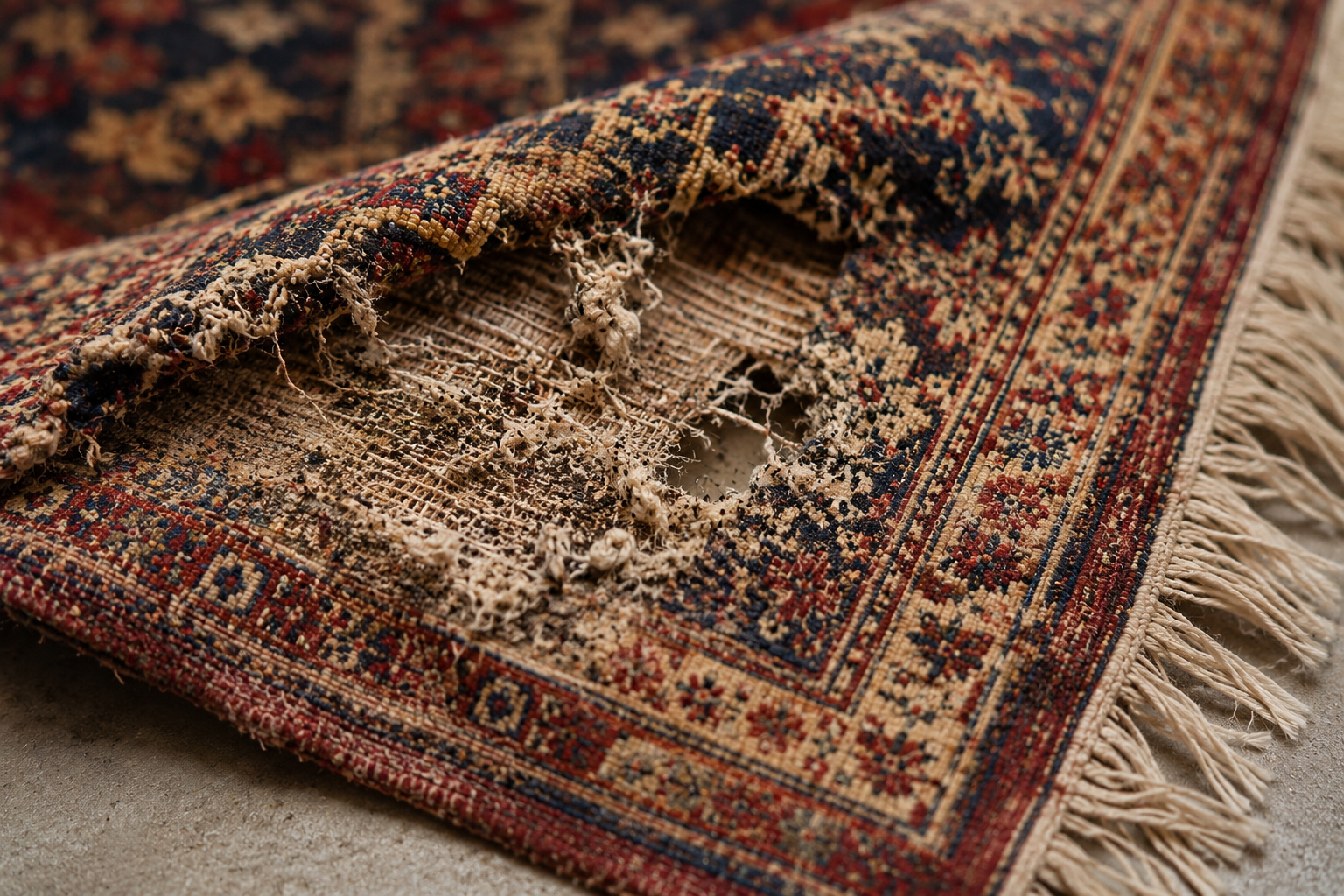
Moth damage is one of the most common and serious problems affecting wool rugs, Persian rugs, Oriental rugs, antique rugs and handmade carpets. Many people do not notice the damage until the rug has already developed bare patches, loose fibres, holes, thinning areas or weakened fringes. By this stage, the moth larvae may have already eaten through the wool pile and affected the structure of the rug.
The good news is that many moth-damaged rugs can be improved, stabilised or restored. However, the success of the repair depends on the extent of the damage, the type of rug, the age of the rug, the condition of the foundation and whether the affected areas are still strong enough to hold restoration work.
At Rugmaster, we provide specialist rug repair and restoration for moth-damaged rugs, including Persian rugs, Oriental rugs, wool rugs, antique rugs, kilims and handmade carpets. In many cases, we recommend professional cleaning first so the rug can be properly assessed before restoration begins.
What Causes Moth Damage in Rugs?
Moth damage is caused by moth larvae, not the adult moths themselves. The larvae feed on natural fibres such as wool, silk and animal hair. This makes handmade wool rugs, Persian rugs and Oriental rugs particularly vulnerable.
Moths are usually attracted to dark, quiet and undisturbed areas. Rugs kept under furniture, in storage, behind doors, under beds or in low-traffic rooms are more likely to develop moth damage. The damage often starts in areas that are not cleaned or inspected regularly.
Common causes of moth problems include:
- Rugs stored for long periods
- Rugs kept in dark or damp rooms
- Heavy dust and dirt inside the pile
- Pet hair or food particles trapped in the rug
- Poor ventilation
- Furniture covering parts of the rug
- Wool rugs not cleaned for many years
This is why regular inspection and professional rug cleaning are important. Cleaning helps remove dust, organic matter and residue that can attract moths.
Signs Your Rug Has Moth Damage
Moth damage can appear in different ways depending on the rug. In some cases, the damage is obvious. In others, it may be hidden until the rug is moved, lifted or professionally inspected.
Common signs of moth damage include:
- Small bare patches in the pile
- Loose wool fibres on the surface
- Areas where the rug looks thinner
- Powdery dust or sandy residue
- Damaged or missing pile
- Small holes in the rug
- Frayed or weakened fringes
- Loose side cords
- Webbing or larvae cases
- Uneven texture when touched
If you see any of these signs, it is best not to ignore them. Moth damage can spread if the rug is left untreated. A small damaged area may become a much larger repair if the rug continues to be used without attention.
Why Wool Rugs Are More Vulnerable to Moths
Wool is a natural fibre, which is why it is used in many high-quality handmade rugs. It is durable, warm, soft and beautiful, but it is also attractive to moth larvae. The larvae feed on the protein in wool fibres, especially when the rug contains dust, food residue, pet hair or other organic matter.
Persian rugs, Oriental rugs, Afghan rugs, Turkish rugs and antique wool rugs are often made from high-quality wool. This makes them valuable, but also means they need specialist care.
A wool rug should not be cleaned with harsh chemicals or standard carpet cleaning methods. Incorrect treatment can cause colour bleeding, shrinkage, pile distortion or further fibre weakness. Rugmaster offers specialist Persian and Oriental rug cleaning in London, using methods suitable for handmade and delicate rugs.
Can a Moth-Damaged Rug Be Repaired?
In many cases, yes. A moth-damaged rug can often be repaired, but the correct method depends on the severity of the damage.
Minor moth damage may only require cleaning, moth treatment and small pile restoration. More serious damage may need re-piling, foundation repair, hole repair, side securing or fringe restoration. If the damage is extensive, the rug may need structural stabilisation before any cosmetic work can be carried out.
Common moth damage repairs include:
- Re-piling bare patches
- Repairing small holes
- Strengthening weakened foundation
- Securing loose edges
- Rebuilding damaged corners
- Repairing fringes
- Replacing damaged side cords
- Stabilising threadbare areas
- Colour balancing after repair
At Rugmaster, our rug restoration service is designed to preserve the rug as carefully as possible. The aim is not only to improve the appearance, but also to protect the rug from further deterioration.
Why Cleaning Is Often Needed Before Moth Damage Repair
Before restoring a moth-damaged rug, cleaning is often an essential first step. A rug affected by moths may contain loose fibres, dust, larvae residue, grit and other contamination inside the pile and foundation. If restoration is carried out before cleaning, the damaged fibres may not hold properly.
Professional rug cleaning helps remove dust and residue from the rug. This allows the restoration team to inspect the structure properly and decide which repair method is most suitable.
In many cases, Rugmaster also recommends rug dusting before washing. Dusting helps remove deep dry soil that ordinary vacuuming cannot reach. This is particularly important for handmade rugs, wool rugs and antique rugs, where years of compacted dust can sit deep inside the foundation.
Once the rug has been cleaned and dried, the damaged areas can be assessed more accurately. This helps determine whether the rug can be repaired, whether the repair will be stable, and whether the cost is worthwhile.
When Is a Moth-Damaged Rug Beyond Economical Repair?
Not every moth-damaged rug is worth restoring. If the damage is very severe, the cost of restoration may outweigh the value of the rug. This is especially true if the foundation has been badly eaten, the pile is missing across large areas, or the rug is a machine-made piece with limited market value.
However, value is not always financial. Some rugs are worth restoring because they have sentimental importance. A rug inherited from family, brought from abroad, or connected to a particular memory may be worth repairing even if the market value is modest.
Before deciding, it can be useful to arrange a rug valuation. A professional valuation can help you understand the rug’s likely age, origin, quality, condition and value. This can make it easier to decide whether cleaning and restoration are worthwhile.
Moth Damage in Persian and Oriental Rugs
Persian and Oriental rugs are often worth repairing because they are handmade and can have long-term value. Even when damaged, a good-quality Persian rug may still be worth restoring if the foundation is stable and the design can be rebuilt sympathetically.
Moth damage in Persian rugs often appears as bare wool patches, weakened pile or damaged fringes. If caught early, these areas can often be re-piled or secured before the damage spreads further.
Oriental rugs, including Turkish, Afghan, Caucasian, Chinese and Indian rugs, may also be restorable depending on the construction and materials. Rugmaster’s Persian and Oriental rug cleaning service is often the first step before deciding on restoration.
Should You Try to Repair Moth Damage at Home?
It is not advisable to repair moth damage at home, especially on Persian, Oriental, antique or handmade rugs. Glue, tape, fabric patches or domestic sewing can cause further damage and may make professional restoration more difficult later.
Home sprays may also fail to solve the problem if larvae, eggs or residue remain inside the rug. Some products can affect dyes or leave chemical residue in the fibres.
If you suspect moth damage, the safest option is to have the rug inspected professionally. Rugmaster can advise whether the rug needs cleaning, moth-proofing, repair, restoration or valuation.
How to Prevent Future Moth Damage
Prevention is very important once a rug has been cleaned or restored. Moths prefer dark, quiet and dusty areas, so regular care can reduce the risk of future damage.
To help prevent moth damage:
- Vacuum the rug regularly
- Move furniture occasionally to inspect hidden areas
- Avoid storing wool rugs in damp spaces
- Keep rugs clean and dry
- Check under rugs and behind furniture
- Do not leave rugs rolled in storage for long periods
- Arrange professional cleaning when needed
- Inspect fringes, corners and low-traffic areas
Professional cleaning can also help remove the dust and organic matter that attracts moth larvae. If your rug has been affected before, regular inspection is especially important.
Professional Moth Damage Rug Repair in London
If your rug has moth damage, it is best to act quickly. The longer the rug is left untreated, the more likely the damage is to spread. Even small bare patches can become larger if the foundation continues to weaken.
Rugmaster provides specialist rug cleaning, rug dusting, moth damage rug repair, Persian rug restoration, Oriental rug restoration, antique rug repair and rug valuation services in London and across the UK.
Our team can inspect the rug, explain the condition clearly and recommend the most suitable approach. In some cases, cleaning and moth-proofing may be enough. In other cases, restoration may be needed to rebuild damaged areas and protect the rug.
To arrange an assessment, please contact Rugmaster with clear photos of the moth damage, the rug size and any information you have about the rug’s age or origin.