
Red Wine Stain on a Rug: What to Do Immediately and What Not to Do
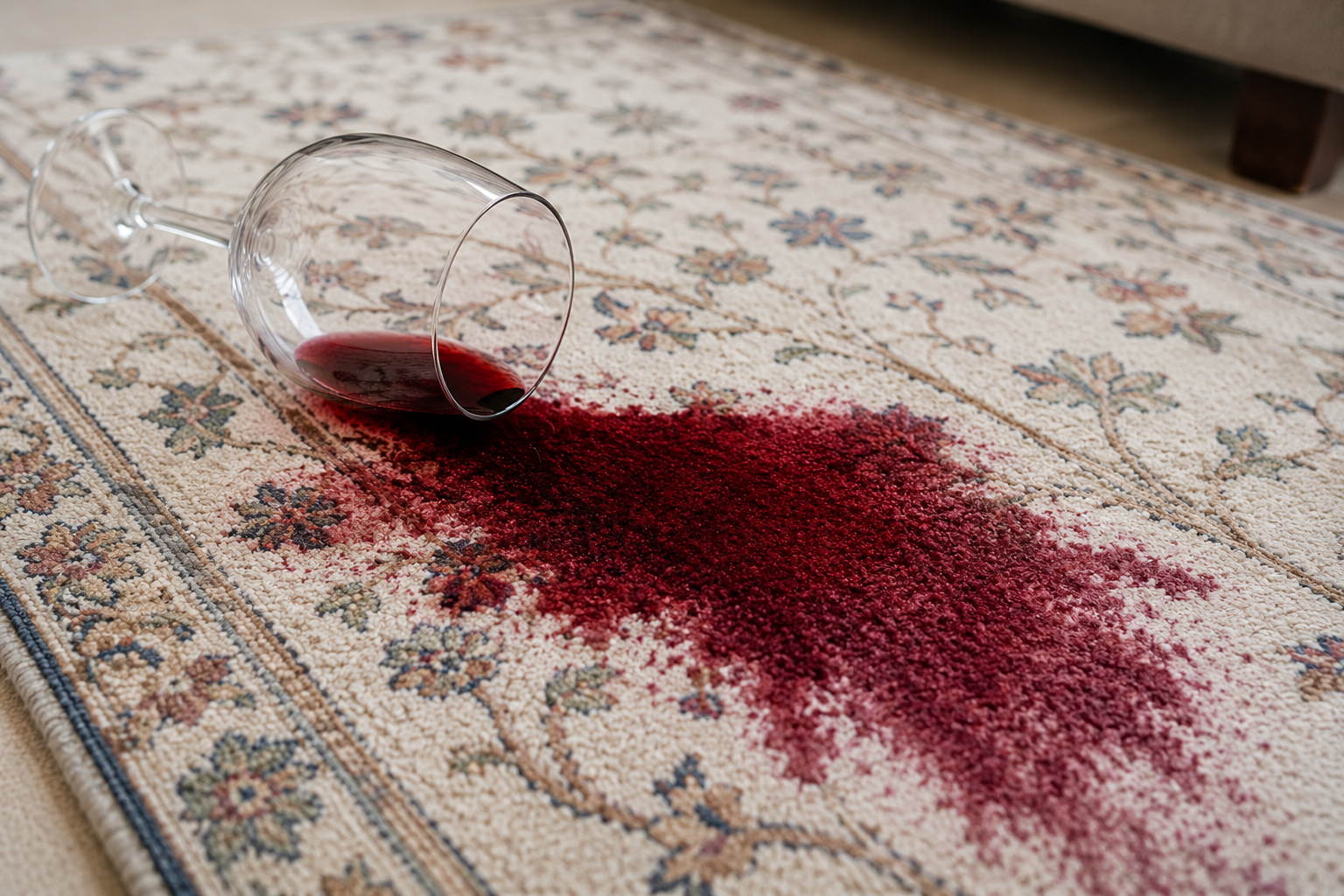
A red wine spill on a rug can feel like a disaster, especially if the rug is handmade, wool, Persian, Oriental, antique or valuable. Red wine is one of the most common emergency rug stains, and unfortunately it is also one of the easiest to make worse with the wrong home treatment.
The most important thing to understand is this: do not panic, do not scrub, and do not pour random stain removers onto the rug. The first few minutes matter, but acting too aggressively can cause permanent colour damage, dye bleeding, fibre distortion or a larger stain.
At Rugmaster, we regularly deal with red wine stains on wool rugs, Persian rugs, Oriental rugs, silk rugs, kilims and modern rugs. Sometimes customers contact us immediately after the spill, which gives us the best chance of improving the stain. Other times, the rug has already been treated with salt, vinegar, washing-up liquid, carpet spray or steam cleaning, which can make the restoration more complicated.
This guide explains exactly what to do immediately after red wine is spilled on a rug, what you should avoid, why some stains become permanent, and when to use a professional rug cleaning service.
Why Red Wine Stains Are Difficult to Remove from Rugs
Red wine is difficult because it contains strong natural pigments called tannins. These pigments can bond quickly with rug fibres, especially absorbent fibres such as wool, cotton and silk. The longer the wine remains in the rug, the deeper it can travel into the pile and foundation.
On handmade rugs, the issue is not only the red wine itself. The cleaning method must also protect the rug’s original dyes, structure and texture. A synthetic fitted carpet may tolerate certain chemical treatments, but a Persian or Oriental rug can react very differently.
The wrong treatment may cause:
- colour bleeding from the rug’s own dyes
- pile distortion from scrubbing
- fibre damage from harsh chemicals
- water marks or tide marks
- browning or yellowing
- permanent stain setting
- shrinkage or foundation distortion
This is why red wine on a valuable rug should always be treated carefully. If your rug is handmade, old, wool, silk or colour-sensitive, the safest approach is to blot the spill and then seek specialist advice from a professional rug cleaner.
For delicate handmade pieces, see our specialist Persian and Oriental rug cleaning service.
What to Do Immediately After Red Wine Spills on a Rug
The first step is to remove as much liquid as possible without spreading it. Use a clean, dry, white towel or white kitchen paper. Place it gently over the spill and press down. Lift it away and repeat with a fresh dry section.
Do not rub. Rubbing pushes the wine deeper into the fibres and can spread the stain across a larger area. It can also distort the pile, especially on wool or silk rugs.
If the wine has gone through the rug, place a towel underneath the stained area as well. This helps absorb liquid from the back of the rug and reduces the chance of the wine sitting in the foundation.
Keep blotting until the towel is no longer picking up much colour. This may take several minutes. Patience is important. The aim is not to clean the rug fully at home, but to reduce the amount of wine in the rug before professional treatment.
Once the area is blotted, allow air to circulate. If possible, lift the rug slightly so the underside can breathe. Do not use a hairdryer, heater or direct heat. Heat can set the stain and make it more difficult to remove.
If the rug is valuable, handmade, silk, antique or has strong colours, stop there and contact a specialist through our Rugmaster contact page.
Should You Put Salt on a Red Wine Stain?
Salt is one of the most common home remedies for red wine stains, but it is not always safe for rugs.
On some washable fabrics, salt may help absorb liquid. However, rugs are different. Salt can leave residue in the pile and foundation. If too much salt is used, it can become difficult to remove completely. On handmade rugs, salt can also interact with moisture and dyes in unpredictable ways.
Another problem is that people often rub salt into the rug. This can grind the wine deeper into the fibres and damage the pile. If the rug is wool, silk, Persian, Oriental, antique or naturally dyed, salt is not the safest option.
If you have already applied salt, do not panic. Allow the area to dry naturally and avoid adding more products. Do not scrub it out while wet. Contact Rugmaster and explain exactly what has been used so we can advise on the safest next step.
For specialist help, visit our rug cleaning page.
Should You Use White Wine on a Red Wine Stain?
Another popular myth is that white wine removes red wine. This is not recommended for rugs.
Adding white wine simply introduces more liquid and more acidity into the rug. It may dilute the red wine slightly, but it can also spread the stain, wet the foundation and increase the risk of dye movement. On a handmade rug, that can make the problem worse.
The correct first response is not to add another drink. The correct response is to blot the red wine carefully with a clean white towel and keep the affected area as controlled as possible.
If the stain is on a Persian, Oriental or wool rug, professional cleaning is usually the safest route. You can read more about specialist treatment on our Persian and Oriental rug cleaning page.
Should You Use Vinegar or Baking Soda?
Vinegar and baking soda are often suggested for household stains, but they can be risky on rugs.
Vinegar is acidic and may affect dyes, especially on handmade rugs with natural or unstable colours. Baking soda can leave powder residue deep in the pile and foundation. When mixed with moisture, it may also create a paste that is difficult to remove fully.
On a light synthetic rug, some home remedies may appear to help. But on a Persian, Oriental, wool, silk or antique rug, the risk is much higher. Once the original dyes are affected, the repair becomes more specialist and sometimes impossible to correct completely.
If you are dealing with a valuable rug, avoid vinegar, baking soda, bleach, washing-up liquid and supermarket stain removers unless a professional has confirmed they are safe for that specific rug.
If colour damage has already happened, our rug colour restoration service may be able to assess whether improvement is possible.
Why You Should Never Scrub a Red Wine Stain
Scrubbing is one of the biggest mistakes people make after spilling red wine. It feels natural to scrub because you want to remove the stain quickly, but rugs are not designed to be treated that way.
Scrubbing can:
- spread the red wine into a larger area
- force wine deeper into the foundation
- damage wool fibres
- flatten or distort the pile
- create a fuzzy, worn patch
- cause colour movement
- make the final stain harder to remove
This is especially important for handmade rugs. The pile direction, knot structure and surface texture can all be affected by aggressive rubbing. Even if the wine stain improves slightly, the rug may be left with a visibly damaged area.
Always blot, never scrub. Press, lift, repeat. If the stain remains, let a specialist take over.
Can You Use Carpet Stain Remover on a Rug?
Many carpet stain removers are designed for synthetic fitted carpets, not handmade rugs. They may contain bleaching agents, solvents, detergents, optical brighteners or alkaline ingredients that are unsuitable for wool, silk and natural dyes.
A product that works on a beige synthetic carpet may cause serious damage on a Persian rug. It may lighten the rug’s original colour, create a halo mark, leave sticky residue or trigger dye bleeding.
If you have already used a carpet stain remover, keep the bottle and take a photo of the ingredients if possible. When you contact Rugmaster, let us know exactly what was applied and how long it was left on the rug. This helps us assess the risk and choose the safest treatment.
For more advice on why professional care is different from home cleaning, read our guide: Professional Rug Cleaning Services vs DIY.
Why Steam Cleaning Can Make Red Wine Stains Worse
Steam cleaning is not usually suitable for red wine stains on handmade rugs. Heat can set tannin stains, making them more difficult to remove. Steam can also drive the wine deeper into the rug and wet the foundation excessively.
On Persian and Oriental rugs, steam can create additional risks, including shrinkage, dye movement and texture change. If the rug does not dry quickly and evenly, it may also develop a musty smell or browning.
Professional rug cleaning is different from steam cleaning. At Rugmaster, rugs are inspected, dusted, tested, washed and dried according to their fibre, construction and condition. For valuable rugs, controlled cleaning is much safer than applying heat and moisture in the home.
You can learn more about our specialist process on the rug cleaning service page.
Red Wine on Wool Rugs
Wool is naturally resilient, but it is also absorbent. Red wine can penetrate wool fibres quickly, especially if the rug has a soft or open pile. The good news is that wool rugs can often respond well to professional treatment if the stain is handled quickly and correctly.
The key is to avoid setting the stain. Do not use hot water, steam, bleach or harsh chemicals. Blot the stain carefully and arrange professional cleaning as soon as possible.
Wool rugs also hold dry soil and grit deep in the pile. Before washing, proper dust removal is important. Rugmaster offers professional rug dusting as part of specialist rug care, helping remove dry particles before wet cleaning begins.
If a wool rug has both a red wine stain and general odour or dirt, a full wash may be recommended rather than a surface spot clean.
Red Wine on Persian Rugs
Persian rugs are often made with wool pile and cotton foundation, although fine pieces may include silk. Many Persian rugs also have rich colours and detailed designs, which means stain treatment must be handled carefully.
A red wine stain on a Persian rug should not be treated with random household products. The rug’s original dyes need to be tested before any cleaning solution is used. Otherwise, the treatment may remove or move the rug’s own colours.
If the wine has gone deep into the foundation, professional washing may be needed. If a visible stain remains after cleaning, colour correction may be assessed separately.
Rugmaster specialises in Persian and Oriental rug cleaning in London, including hand-knotted rugs, antique pieces and delicate natural-dye rugs.
Red Wine on Oriental Rugs
Oriental rugs vary widely in age, fibre, construction and dye stability. Some are robust wool rugs that can tolerate careful washing, while others are fragile, antique or colour-sensitive.
The first step is always assessment. A professional rug cleaner should check the rug’s condition, dyes, foundation, pile and previous repairs before attempting stain removal.
If the Oriental rug has existing wear, loose fringes, side damage or old repairs, these issues may affect how it can be cleaned. In some cases, cleaning and repair may both be required.
Rugmaster provides both rug cleaning and rug repair and restoration, so we can advise on the full condition of the rug rather than treating the stain alone.
Red Wine on Silk Rugs
Silk rugs require the greatest caution. Silk is delicate, sensitive to moisture and easily affected by chemicals. A red wine stain on a silk rug should be treated as urgent.
Do not scrub a silk rug. Do not use salt, vinegar, stain remover, washing-up liquid or steam. Blot very gently with a clean white towel and contact a specialist.
Silk can show water marks, texture changes and dye movement if treated incorrectly. Even professional cleaning must be approached carefully after inspection and testing.
If you own a silk rug, you may also find our care guide useful: Silk Rugs UK: Rugmaster’s Tips for Selection and Maintenance.
Red Wine on Kilim and Flatweave Rugs
Kilim and flatweave rugs can be difficult because they do not have a thick pile to hide staining. Red wine can spread along the weave and may pass quickly through to the back of the rug.
Many kilims also contain strong reds, blues and natural dyes, which means there is a risk of colour movement if the wrong product is used. A stain treatment that is too wet may cause the wine and the rug’s own dyes to move together.
Blot only. Avoid rubbing and avoid chemical treatment. If the rug is handmade or valuable, professional inspection is strongly recommended.
If the wine stain has caused colour bleeding or the colours have moved, Rugmaster can assess whether colour bleeding and restoration may help.
When a Red Wine Stain Becomes Permanent
Not every red wine stain can be fully removed. The result depends on several factors:
- how quickly the spill was blotted
- how long the wine stayed in the rug
- whether heat was applied
- whether chemicals were used
- whether the rug is wool, silk, cotton, viscose or synthetic
- whether the rug’s dyes are stable
- whether the stain reached the foundation
- whether the rug has previous damage or wear
Fresh stains are usually easier to improve than old stains. If the wine has been left for days or weeks, it may have bonded with the fibres. If a stain remover has already affected the rug’s dye, colour restoration may be more difficult.
A responsible rug specialist should never guarantee perfect removal without inspection. The aim is to achieve the safest and best possible result while protecting the rug.
Can Red Wine Cause Colour Bleeding?
Yes, especially if the rug is then treated incorrectly. Red wine itself is a strong-coloured liquid, but the bigger risk is when customers add water, vinegar, cleaning sprays or steam. These can destabilise the rug’s original dyes.
Colour bleeding may appear as a red, pink, orange, blue or brown shadow around the affected area. The pattern may look blurred, or the surrounding fibres may become discoloured.
If you see colour movement, stop immediately. Do not continue cleaning. Contact a specialist and explain what has happened.
Rugmaster offers rug colour restoration for certain cases of dye movement, fading and colour damage. The rug needs to be assessed before we can confirm what improvement is possible.
Why Professional Cleaning Is Safer for Valuable Rugs
Professional rug cleaning is not just about removing the stain. It is about treating the stain while protecting the rug’s structure, fibre and dyes.
At Rugmaster, the process may include:
- inspection of the rug’s fibre and condition
- dye stability testing
- dry dust removal
- controlled stain treatment
- specialist washing where suitable
- careful rinsing
- controlled drying
- final grooming and inspection
This is very different from applying a supermarket product at home. A handmade rug may have financial value, sentimental value or both. Treating it incorrectly can reduce that value or create permanent damage.
If your rug is old or valuable and you are unsure whether cleaning is worthwhile, we also offer rug valuation services.
What to Tell a Rug Cleaner After a Red Wine Spill
When contacting a professional rug cleaner, give as much detail as possible. This helps the specialist understand the likely severity and risk.
Useful information includes:
- the size of the rug
- the type of rug, if known
- when the wine was spilled
- how much wine was spilled
- whether it reached the back of the rug
- what you used on it, if anything
- whether the rug has silk, wool or natural dyes
- whether the rug has existing damage
- your postcode for collection
Photos are also helpful. Take clear photos of the stain from the front and, if possible, the back. However, photos cannot always show the full extent of the stain, especially if the wine has reached the foundation.
You can send details and images through the Rugmaster contact page.
Should the Whole Rug Be Cleaned or Only the Stain?
In many cases, the whole rug should be cleaned rather than only the stained area. Spot cleaning alone can sometimes leave a clean patch, water mark or halo, especially if the rest of the rug has general dirt and dust.
A full clean helps even out the appearance and removes dust, odours and residues from the entire rug. This is particularly important for handmade wool rugs that have not been cleaned for several years.
However, every rug is different. If the rug is fragile, antique or highly colour-sensitive, the cleaning method must be chosen carefully. Rugmaster will assess the rug and recommend the safest approach.
For more information about full rug washing, visit Rug Cleaning London.
Can Rug Repair Be Needed After a Wine Spill?
Usually, red wine causes staining rather than structural damage. However, repair may be needed if the rug was already weak, if aggressive scrubbing damaged the pile, or if chemicals affected the fibres.
Sometimes a customer scrubs so hard that the pile becomes fuzzy, worn or distorted. In other cases, bleach-based stain removers remove colour from the rug, leaving a pale patch that requires colour restoration.
If the rug also has loose fringes, damaged sides, holes or moth damage, it may be sensible to clean the rug first and then carry out restoration work. Rugmaster provides rug repair and restoration for fringes, side cords, holes, tears, worn areas and structural damage.
How to Prevent Red Wine Stains on Rugs
Accidents happen, but there are ways to reduce the risk of serious damage.
Avoid placing valuable rugs directly under dining tables if red wine is regularly served. If you are hosting a party, consider moving delicate rugs out of high-risk areas.
Use suitable rug underlay to prevent movement. A rug that slips or bunches can increase the chance of spills.
Have rugs professionally cleaned periodically. Clean fibres can sometimes respond better to stain treatment than fibres already loaded with soil and residue.
Keep a clean white towel available when entertaining. Immediate blotting is the safest first response.
Most importantly, know what not to do. Avoid scrubbing, heat, bleach and harsh stain removers.
Emergency Red Wine Stain Checklist
If red wine has just spilled on your rug, follow this simple checklist:
- Stay calm.
- Use a clean, dry, white towel.
- Blot gently. Do not rub.
- Place a towel underneath if the wine has gone through.
- Keep blotting until little colour transfers.
- Do not use salt, vinegar, bleach, steam or stain remover.
- Allow airflow, but do not use heat.
- Contact a specialist rug cleaner if the rug is valuable or handmade.
For urgent advice, contact Rugmaster with photos, rug size and details of the spill.
Frequently Asked Questions About Red Wine Stains on Rugs
Can red wine be removed from a wool rug?
Often, yes, especially if the spill is treated quickly and correctly. Wool rugs can respond well to professional cleaning, but the result depends on the age of the stain, the rug’s dyes and whether any chemicals have already been used.
Can red wine be removed from a Persian rug?
In many cases, red wine can be improved or removed from a Persian rug, but the rug must be inspected and dye-tested first. Persian rugs should not be treated with random household stain removers.
Should I put salt on red wine spilled on a rug?
We do not recommend salt for valuable, wool, silk, Persian, Oriental or handmade rugs. Blotting with a clean white towel is safer.
Does white wine remove red wine from rugs?
No. White wine is not a proper rug cleaning treatment. It can spread the stain and add more liquid to the rug.
Can vinegar remove red wine from a rug?
Vinegar can be risky on handmade rugs and may affect dyes. It is safer to avoid vinegar unless a rug specialist has advised it for that specific rug.
Can steam cleaning remove red wine?
Steam cleaning can set tannin stains and may damage handmade rugs. It is not usually recommended for Persian, Oriental, wool or silk rugs.
What if the stain has already dried?
A dried red wine stain may still be improved professionally, but it is harder to treat than a fresh spill. Avoid applying more products and arrange an inspection.
Do you collect rugs with red wine stains?
Yes, Rugmaster can arrange collection and delivery depending on your location. Send your postcode, rug size and photos through our contact page.
Final Advice: Blot First, Then Get Specialist Help
A red wine stain on a rug is not something to ignore, but it is also not something to attack with harsh chemicals. The safest first response is simple: blot gently with a clean white towel, avoid rubbing, avoid heat and avoid household stain removers.
If your rug is handmade, Persian, Oriental, wool, silk, antique or valuable, professional treatment is strongly recommended. The aim is not only to remove the red wine but also to protect the rug’s original dyes, pile, foundation and long-term value.
At Rugmaster, we provide specialist rug cleaning, Persian and Oriental rug cleaning, rug repair and restoration, colour restoration, rug dusting and rug valuation.
For advice, pricing and collection, contact Rugmaster today through our contact page. The sooner the rug is assessed, the better the chance of achieving a safe and successful result.